
Apps
6 best wardrobe apps in 2026
Comparing Kiru, Acloset, GetWardrobe, Tidy, Whering, and Fits: creating outfits from your own clothes, wardrobe organization, free features, and limits.
November 2, 2026 · 10 min
· 4 min

A capsule wardrobe is a collection of clothes that work together. It is not a list of “must-buy” items or a white T-shirt and jeans, but a simple quality: every top goes with every bottom, so you do not have to solve the same problem every morning.
Here is how to build a capsule from what you already own.
The familiar “33 items per season” rule was not designed for everyone: the number came from a personal experiment and spread through articles as a standard. It makes more sense to count outfits than items.
Here is how it works: five tops and four bottoms that all go together give you twenty outfits. Ten items bought separately that do not work with anything else give you five.
So the question is not “how many items?” but “how many combinations?”
The first obstacle to building a capsule is the clothes you have forgotten. They hang at the back of your closet, never make it into outfits, and still take up mental space: it feels like you have plenty of clothes but nothing to wear.
Take out everything you wear this season and divide it into three piles:
The second and third piles explain where your money and closet space went.
Your foundation is two or three colors that work together and with most of your clothes. For some people, that means black, gray, and white; for others, beige, brown, and blue. There is no single correct palette — there is yours.
It is easy to check: look at the first pile. The colors that appear most often are your foundation. You have already chosen it; now you just need to notice it.
Next, do not make an item list — put outfits together. Take a top and find everything that works with it. Then move on to the next one.
This step reveals something important: the pieces that do not go with anything. They are often a statement item bought on its own or something outside your core palette. You do not need to throw them away — just recognize that you will need to build outfits around them separately.
Only now does it make sense to talk about shopping. A wardrobe gap is not “I don't have a basic white shirt.” It is a specific outfit you cannot put together: you have three tops for your pants and none for your skirt.
That kind of list is short, specific, and does not grow on its own.
Laying your clothes out on the bed works well once. By the next season, you will have forgotten what you own again — and the sorting starts over.
In Kiru, your wardrobe lives on your phone: add items from photos, organize them into folders, and create outfits by dragging pieces around like icons on a screen. You only need to sort your closet once; after that, you can see it all at a glance.
Most importantly, you do not have to keep outfits in your head. A finished look stays in the app instead of in your memory until morning.
Comparing Kiru, Acloset, GetWardrobe, Tidy, Whering, and Fits: creating outfits from your own clothes, wardrobe organization, free features, and limits.
November 2, 2026 · 10 min
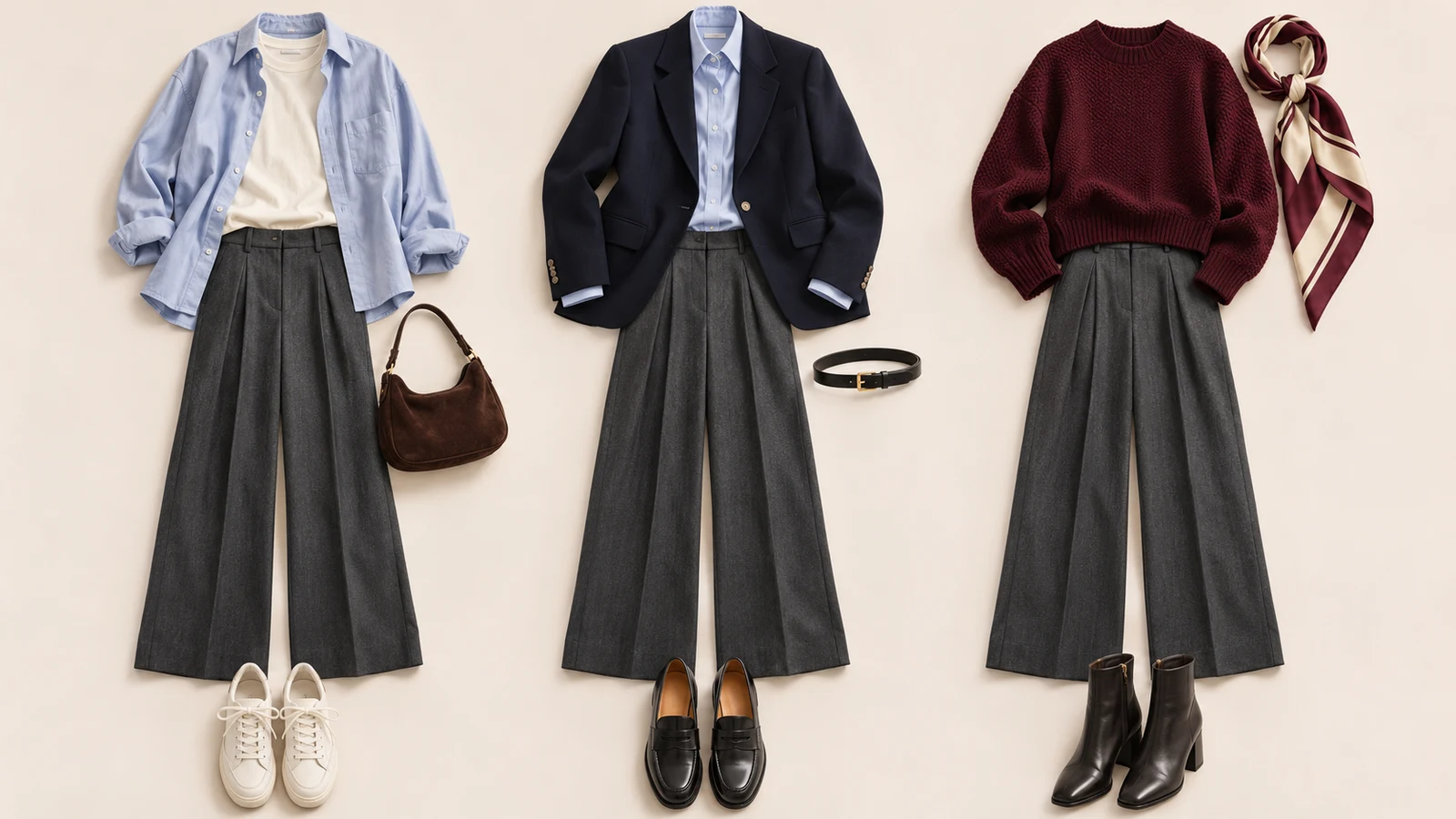
How to create outfits from your own clothes: choose a wardrobe app and combine colors, layers, and textures. Outfit examples, stylist advice, and research.
November 7, 2026 · 17 min